Living in the Garden Route, we are surrounded by incredible natural beauty, from the lush forests to the pristine coastline. However, this beautiful region is also susceptible to periods of drought and water restrictions, making water conservation a top priority for every homeowner. One of the most effective and sustainable ways to secure your water supply and reduce your reliance on municipal water is through rainwater harvesting.
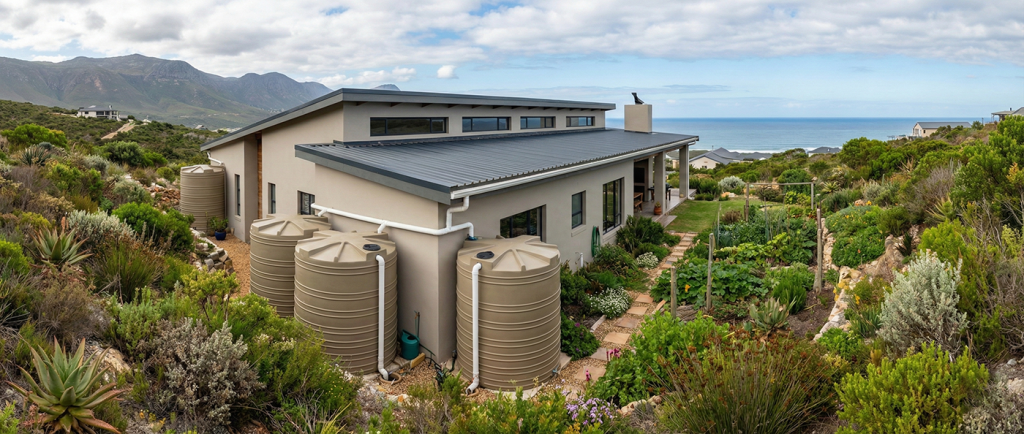
Rainwater harvesting is the process of collecting and storing rainwater from your roof to be used for various purposes around your home and garden. It’s a practice that has been used for centuries, but modern technology has made it more efficient and accessible than ever before. For residents of the Garden Route, from Plettenberg Bay to George, installing a rainwater harvesting system is a smart investment that offers both environmental and financial benefits.
How Does Rainwater Harvesting Work?
A typical rainwater harvesting system consists of a few key components:
- Catchment Surface: This is usually your roof. The larger and cleaner your roof, the more water you can collect.
- Gutters and Downpipes: These channels direct the rainwater from your roof to your storage tank.
- Pre-filtration System: A good system will include a leaf catcher and a first-flush diverter. The first-flush diverter is crucial as it prevents the first, most contaminated, batch of rainwater from entering your tank, ensuring the water you store is as clean as possible.
- Storage Tank: Rainwater tanks come in a variety of sizes, shapes, and materials to suit your needs and space. JoJo Tanks are a popular and reliable choice in South Africa.
- Pump and Filtration (Optional): If you want to use the rainwater for more than just watering the garden, you’ll need a pump to create pressure and a more advanced filtration system to ensure the water is safe for indoor use.
The Benefits of Rainwater Harvesting in the Garden Route
- Water Security: During times of drought and water restrictions, having your own water supply provides invaluable peace of mind. You can continue to water your garden, wash your car, and even supply your home with water, depending on your system’s setup.
- Reduced Municipal Water Bills: By using rainwater for tasks like irrigation, toilet flushing, and laundry, you can significantly reduce your consumption of municipal water, leading to substantial savings on your monthly bills.
- Environmentally Friendly: Rainwater harvesting reduces the demand on our dams and rivers, helping to conserve this precious natural resource. It also reduces the amount of stormwater runoff, which can help prevent soil erosion and flooding.
- Improved Garden Health: Rainwater is naturally soft and free from the chlorine and other chemicals found in treated municipal water. This makes it much healthier for your plants, resulting in a more vibrant and flourishing garden.
Integrating Rainwater Harvesting with Your Existing Plumbing
One of the great things about modern rainwater harvesting systems is that they can be seamlessly integrated with your existing plumbing. A professional plumber can connect your rainwater tank to your home’s plumbing system, allowing you to use the harvested water for toilets, washing machines, and even showers and taps with the right filtration.
It’s important to note that if you plan to use rainwater for drinking, it must be properly filtered and purified to remove any harmful bacteria or contaminants. A multi-stage filtration system, including sediment filters, carbon filters, and an ultraviolet (UV) sterilizer, is highly recommended to ensure the water is safe for consumption.
Getting Started with Rainwater Harvesting
If you’re considering installing a rainwater harvesting system in your Garden Route home, the first step is to consult with a professional plumbing company. They can assess your property, help you choose the right size tank and components for your needs, and ensure the system is installed correctly and in compliance with local regulations.
Embracing rainwater harvesting is a proactive step towards a more sustainable and water-secure future for the Garden Route. It’s a practical and effective way to conserve water, save money, and protect our beautiful environment. Contact Louw Bros today to find out how you can start harvesting the rain and making every drop count.